The B2B Blind Spot: Why "Million-Dollar" Marketing Fails the $50 Customer
Why do premium brands spend millions on aesthetics only to lose the customer at the checkout? This article explores the "Digital Dead-End" in B2B marketing and how a Digital Retailer Hub bridges the gap between high-end design and high-velocity retail.
Zoé Adam
3/30/20262 min read
In the world of high-end manufacturing, there is a massive psychological gap between a brand’s digital presence and its actual business model. Most legacy companies operate on a scale of "millions"—millions in production, millions in retail contracts, and millions spent on global marketing.
But in this "macro" view, the $50 customer has become an invisible afterthought. This isn't just a missed connection; it is a fundamental waste of a brand's most expensive asset: Its digital presence.
The Marketing Paradox: Spending to be Found, then Staying Hidden
Every year, brands pour significant budgets into aesthetic social media campaigns, high-end photography, and influencer partnerships. The goal is to build a fanbase and create "desire." But if that desire leads a customer to a dead-end website, the entire marketing spend is effectively a donation to the internet.
If a brand builds an online presence but doesn't take advantage of the traffic it generates, what is the point of having it? A digital presence shouldn't just be a "validation" tool to show retailers that "people want our product." It must be a functional bridge that honors the fans who are actually doing the wanting.
The "Individual" Gap: Why Customers Feel Ignored
The average person scrolling through TikTok or Instagram doesn't understand or care about the complex concept of B2B. When they see a product they love, they see a brand they want to support.
The Perception: When a website makes it difficult to buy, the customer doesn't think "This is a B2B logistics choice." They think: "This brand doesn't care about my $50 purchase; they only care about their million-dollar retail partners."
The Reality: This creates a cold, mechanical relationship. You are asking for a customer’s attention and "likes," but refusing to give them the basic courtesy of a "Buy" button.
Bridging the Gap without Breaking the Model
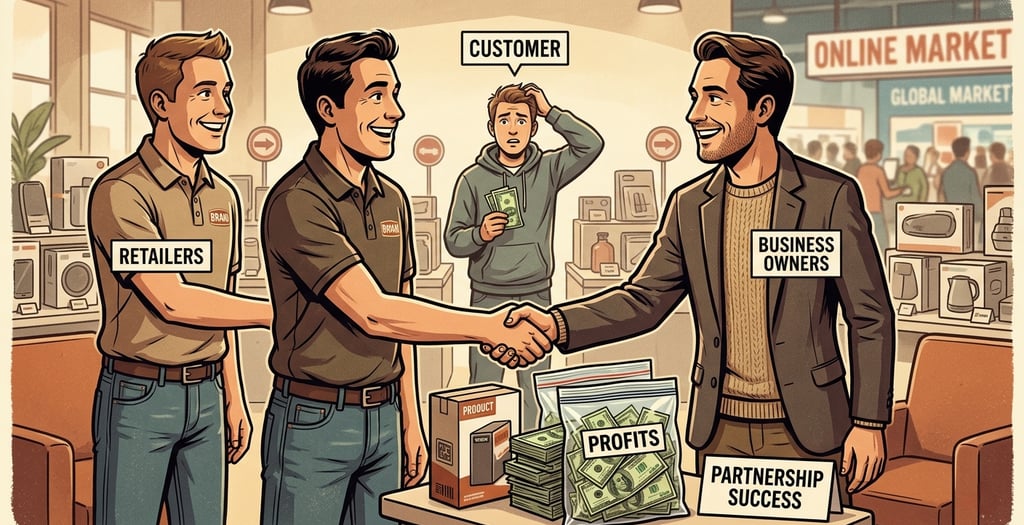
The goal of a Digital Retailer Hub is not to dismantle the B2B model. It is to keep the end-consumer in mind, even if you never physically hand the product to them.
You can reach retailers directly to sell your stock, but your online fanbase is the leverage that keeps those retailers buying. To maintain that leverage, you must give those people credit. You must make it effortless for them to find what they are looking for.
The "Human" Logic of the Retailer Bridge:
Stop the Search Fatigue: Don't ask a fan to leave your ecosystem and dig through a third-party search engine. Provide a direct, one-click link to a trusted retail partner.
Respect the Impulse: Capture the intent while it is hot. A "Get it Today" button respects the customer’s time and the marketing dollars you spent to reach them.
Mutual Success: By making the "individual" purchase easy, you are directly feeding your "million-dollar" retailers. You aren't choosing one over the other; you are using the fan to fuel the partner.
The Bottom Line: Value the $50 to Keep the Millions
A website is not a museum; it is an ecosystem. If you are going to invest in the "look" of a modern brand, you must invest in the "logic" of a modern brand.
B2B shouldn't mean "Business to Boring." It should mean "Business to Brand-Loyalty." By placing the customer at the center of your digital strategy, you ensure that every marketing dollar spent actually lands in a retailer’s cash register and keeps your fans com ing back for more.